Just A Girl?

JUST A GIRL? Ivonne Martin hits the sirens and calls out the roadblocks faced by women, not only in learning, but across all industries.
“I’m just a girl, I’d rather not be ‘cause…” Those are the lyrics I used to shout at the top of my lungs. As an elder millennial, I deeply appreciate and resonate with No Doubt's “Just a Girl”.
Growing up in a Latino household was a study in contradictions. On one hand, my sister and I were raised to believe we could do anything we set our minds to. On the other hand, we were quietly and sometimes loudly limited. Steered away from certain activities and opportunities, not because of our abilities, but because we were girls.
The same trajectory followed me into the workforce.
When I entered the emergency medical field, notoriously male-dominated, the gender inequality was immediately evident and concrete. I was rarely given the opportunity to drive the ambulance. The assumption was that men had more control and better instincts behind the wheel. So, I stayed in the back, doing patient care. I was good at it and learned from it. But I also wanted the chance to drive through the city I loved, serving the community I called home.
That chance was slow to come.
As I got older, the pattern continued. Sometimes it was subtle, sometimes it was pretty impossible to ignore.
Now more than a decade into learning and development, I have a few stories to tell.
Early in my career as a brand new Instructional Designer, I was grateful just to have a foot in the door. Breaking into the field was genuinely difficult at the time. I’ve always been curious and creative, and one of the things that drew me to instructional design was the ability to build eLearning, to create something real in the online world. The fascination goes all the way back to the dial-up and AOL days, to the feeling of an entire new world opening up. That passion never left me.
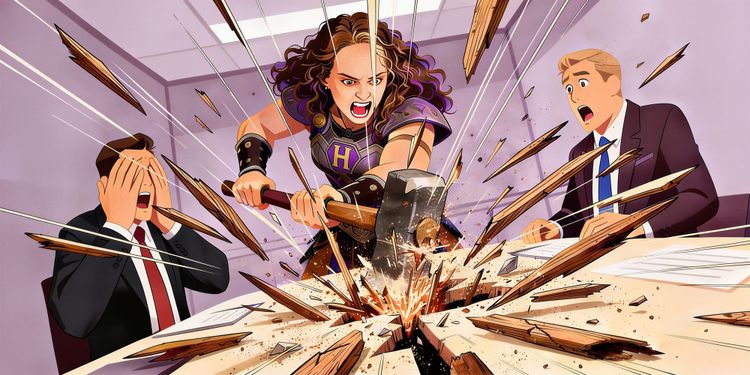
So when I started my first job and noticed I was consistently handed administrative tasks and design work, but never development, it physically stung on the inside but also it made me think about things. I looked around and saw the same pattern: the men got to work in tools like Adobe Captivate, Camtasia, and other development tools. Nobody was going to hand me an opportunity, so I advocated for myself until I earned a seat at the table. I got the professional development. I learned the tools. But I shouldn’t have to fight for it.
The workplace challenges don’t stop there for women, especially mothers. The expectation to perform 110% doesn’t pause for school pickups, sick children, or scheduling conflicts are ours to “manage”. We are expected to figure it out, absorb it, and use PTO for it. The disparity is real, still very much happening, and quite frankly it can be exhausting.
Now with over a decade of experience, I’m focused on amplifying my voice and sharing what I know. That means submitting proposals to speak at learning and development conferences and professional organizations. And when I look at those stages, I notice a familiar pattern, oftentimes, it’s the same voices. To be clear, that’s not a knock on those speakers. Many of them are brilliant, experienced, and worth hearing. But when the same group consistently holds the microphone, it raises a bigger question: who isn’t in the room, and why?
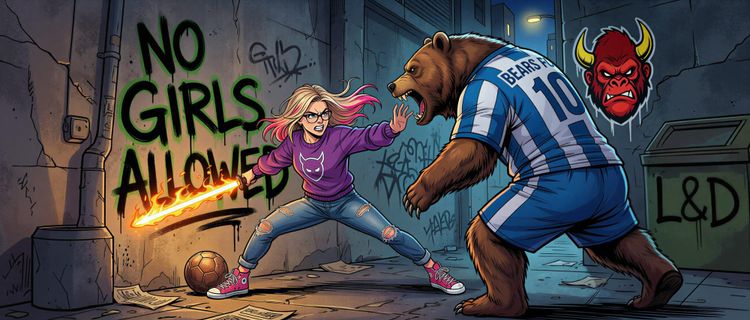
In my experience, the industry still skews heavily male, leaving limited spaces for women to share their expertise and perspectives. And that’s before we even get to the women who look like me, minority, Afro-Latina, Black and Brown women. That’s a separate, compounding conversation, and one that equally demands attention.
Gender disparity isn’t unique to learning and development. It’s a broad, persistent, and even systemic issue. And fixing it will take more than the women living it raising their voices. It requires everyone to see it, name it, and advocate for change.
Ivonne Martin is an Instructional Designer, Course Creator, and Magical Witch! Connect with her here: https://www.linkedin.com/in/ivonneid/
Follow her eLearning Bestie TikTok here: https://www.tiktok.com/@elearningbestie
Member discussion