Smashing Boardrooms, Taking Names
SMASHING BOARDROOMS, TAKING NAMES Forget asking for a seat at the table. Dr. Heidi Kirby is calling out the L&D gender gap, dropping the people-pleasing, and building her own damn table.
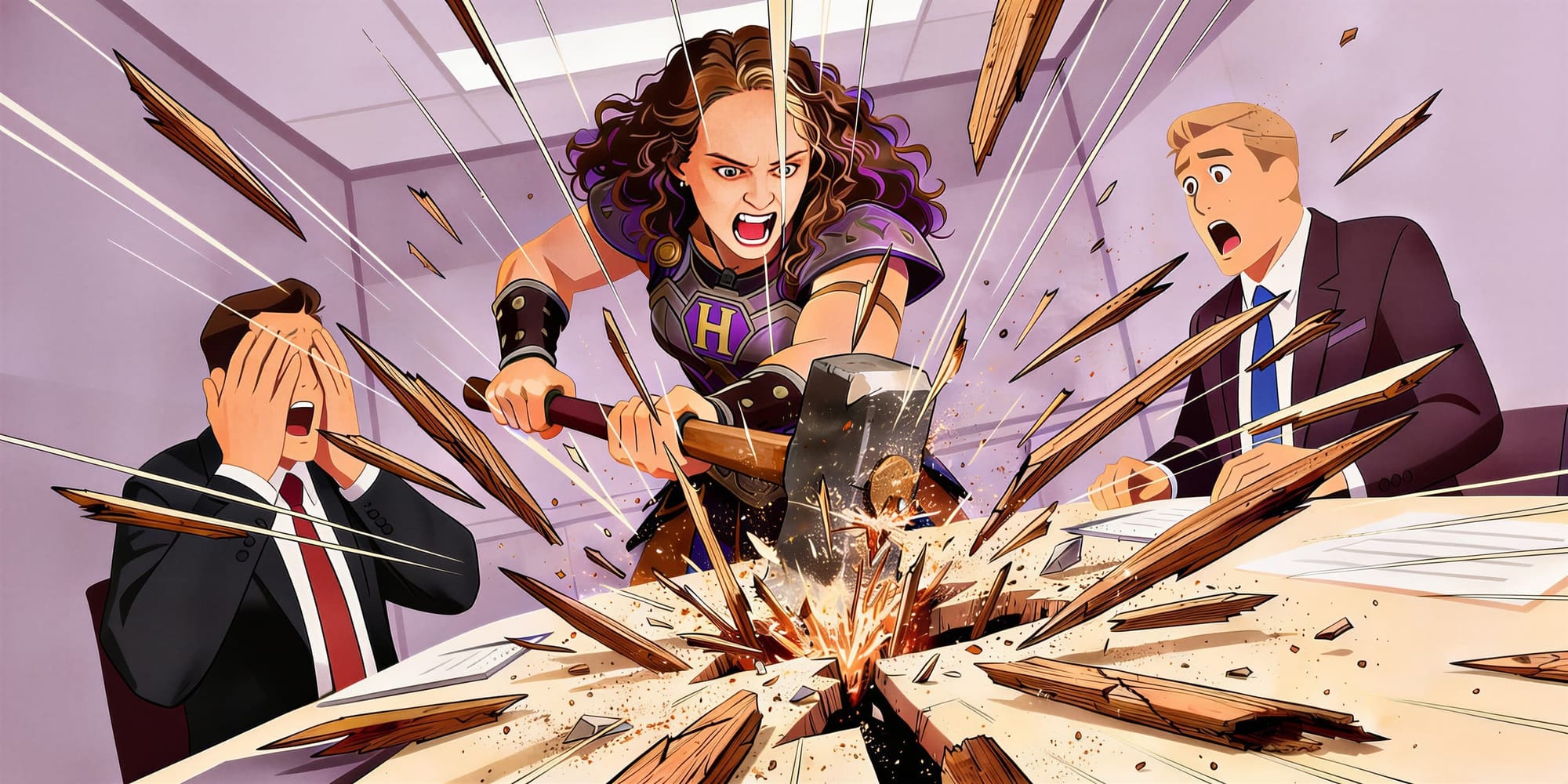
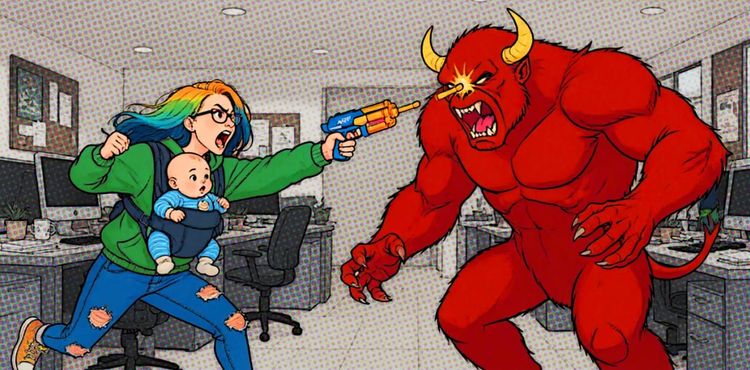
“Well, I would have to read those studies for myself.” the VP said, chuckling as he elbowed the man sitting next to him.I felt my cheeks get hot. I was relieved when my boss changed the subject, “Well, what do you think of the interface…”
You see, as an L&D expert, I found myself seated in a room with several other men, which wasn’t abnormal. However, these men were from the automotive industry, and I expected the crudeness but not the disrespect. Oh, you sweet, summer child.
My boss, the founder of a mobile learning app, was pitching it to some leaders of car companies you’ve definitely heard of before. I was tagging along for my expertise in learning – it wasn’t uncommon. One of the men had said, “we can’t use this, what about the hands-on learners? Everyone has a different learning style, and this won’t work for them.”
I explained that we wouldn’t be getting rid of hands-on learning but that the tool would supplement it. Then, I explained that learning styles were a myth and offering people different ways to access learning and information was a more productive strategy. He immediately interrupted me and asked where I heard that learning styles were a myth. I told him that some of the studies I read in my PhD program had proven it… and now, you’re caught up.
When we walked out of the room, my boss said, “I am so sorry…that he swore so much.” I thought, “WHAT? THAT was his takeaway?” I can handle a few fucks here and there – what I have a lot more trouble dealing with is people who assume that because I’m a woman, I don’t know what I’m talking about.
Unfortunately, this hasn’t been the exception in my career or my life – it’s been the rule.
As if women don’t have enough going on already, we don’t need our credibility constantly questioned. It’s time we stop playing nice and demand the respect and place we’ve worked so hard to earn.
The Insurmountable Odds for Women in the Workplace
By the time women are old enough to join the workforce, most have already got an unfair workload at home. For the majority of us, our bodies are just a few years away from turmoil that we’re not prepared to deal with properly. As the cherry on top, the L&D industry refuses to acknowledge the gender problem – despite pandering to women during large events, and they refuse to change anything, even when presented with the data. The imbalance has caused many women in L&D to work twice as hard as men for half the recognition.
Women make up nearly 60% of unpaid caregivers and over 80% of paid in-home caregivers for seniors in the US. The Federal Reserve's 2024 household data sums it up, “women were significantly more likely than men to be the primary caregiver for their own children and provide unpaid care for sick or aging adults – which contributed to their lower rates of work for pay.” In addition to our daily responsibilities, we’re also caring for our children and our parents at a higher rate than men. Meanwhile, despite being as productive as men in their roles, women were 20% more likely to be fired for mistakes, and after their dismissal – it took women longer, on average, to find new roles.
And when we get to a certain age in our career as women, 80 to 90% of us will experience “problematic symptoms” during menopause. Nearly half of women say menopause has impacted their job performance, and 42% say symptoms have impacted their ambition! Their ambition! This effect is 27% higher for women under 50, meaning perimenopause hits hardest at peak career years and directly impedes women' s ability to get ahead. Yet, of the women surveyed, 64% said their companies offer no formal menopause benefits through HR.
Of course not! We still know so little about perimenopause and menopause and how it affects our own bodies. Despite the fact that it affects over a decade of our professional lives, 94% of women report they never had formal education about menopause. Now, let me tell you about some of the most common symptoms: difficulty concentrating, memory lapses, sleep disruption, fatigue, mood changes (irritability, anxiety, depression), joint pain, headaches, and heart palpitations. So, this is happening to our bodies, at random, somewhere between the ages of 35 and 50. We’re not properly prepared, but we’re expected to keep working and make fewer mistakes than men so we don’t get fired?
Does that sound like we have a fair shot to you?
And you might be saying, “Well, Heidi, lots of people struggle caring for loved ones and with health issues and chronic conditions and disabilities at work.” You’re completely right. But saying that “everyone suffers” doesn’t give us an excuse to simply dismiss these issues. It just means we have a hell of a lot of work to do, and we had better get started.
The Damaging Silence in L&D
But it’s not just society and our companies who are on the hook here. The L&D industry has quietly enforced the gender divide for years. In Sharon Claffey Kaliouby’s Women in Learning report, we learn that “while women power nearly 65% of the Learning and Development workforce, they hold fewer than 20% of C-suite positions.” Despite making up the majority of the industry, we’re underrepresented in leadership.
And not just in companies – the organizations who are supposed to be leading our industry reinforce the unfair gender gap. I’ve done research on some of the biggest US conferences in our industry. Although ATD ICE and DevLearn both reflect the workforce makeup in their general session speakers (roughly 54–58% women for 2026), for the past 10 years, ATD ICE keynote speakers (the ones who get the big bucks to appear) have been approximately 33% women. DevLearn 2026 reinforces this trend, with two keynote spots going to men and just one to a woman. In fact, one of those keynotes is someone I consider a contemporary in every sense of the word (I think he would agree). However, my regular proposal was rejected from DevLearn this year, while he gets paid to take the stage. I am thrilled for him, but I know a lot of women who felt stung by this choice – we can hold space for both things to be true.
Because this imbalance doesn't stop at the events, and if we’re going to fix it, we have to call it out across the board. I pulled every named author from the ATD Press Fall 2025 catalog and counted: roughly 60–65% of the authors are women. It’s well known in the industry that ATD Press does not pay authors in any meaningful sense… you write the book, you do the labor, and the professional exposure is supposed to be enough. So not only are women underrepresented in L&D leadership and events, we are also disproportionately the ones donating our intellectual work to the industry association that benefits from selling it.
Panels in our industry often lean heavily towards men if there are even any women on them. One of the leading L&D conferences in the UK created a “Women in L&D” track and then failed to contact the women who had been nominated to speak, using it as a marketing tool instead of an opportunity to elevate women’s voices. And we’re asked to stay silent because if we speak up, we’re branded as difficult.
Just ask my friend, who has been barred from one of the major L&D conferences because she spoke up about the lack of scientific evidence in the presentations there. She’s offered to work with the event teams in good faith, but they ignore her, and when they did respond – they told her she would be asked to leave if she caused any problems.
Imagine being asked to leave an L&D conference because you’re asking the learning science track to be founded on science, not a skewed interpretation of outdated behavioral science.
Once there was a creator in the L&D space who was running his own instructional design bootcamp. On his recorded coaching sessions that were listed on YouTube for everyone to see, he told a woman that she needed a makeover if she wanted to become an instructional designer. He told another woman that if she didn’t work with an accent coach to “fix” her Middle Eastern accent that she wouldn’t find a job. It wasn’t until a couple of brave men in the industry collected similar stories of verbal abuse and bullying and published them in a Medium article that anyone held this man accountable. The lack of accountability is staggering and is a huge part of the problem.
In fact, just the other morning, I saw a comment from a celebrated L&D author and creator of a “human-centered learning design process” – a grown man – comparing AI rights to women’s suffrage saying “lest we forget that many of the people we consider ‘people’ today have to fight for the right to be considered people.”
This man is taking documented, lived women’s oppression and using it as a rhetorical device to advance a speculative argument about tools – diminishing a very real movement of conscious people who organized, suffered, and died. Worst of all, he’s arguing that skepticism of his argument about AI is equal to sexism. And the one person who dared to hold him accountable? He insulted his intelligence. This man will continue to sell books in our field, and he’ll continue to be praised. People will still use his model because “It makes good points.”
And that’s just the tip of the iceberg – 1% of the stories I’ve collected from women in our field. Brilliant women with impressive backgrounds and multiple degrees. Branded as difficult to work with because they question the status quo. Excluded from conversations because they aren’t being given a fair chance to speak up. Unable to get hired because the CEO hired his buddy again.
As women in L&D, we have to care for everyone and our ever-changing body and be aware of the fact that we’re more likely to be punished and less likely to get a leadership role, but we still need to show up and act likable and be confident but not too confident so that no one feels threatened because if they do, then we might get fired.
Phew. Yeah – that’s a lot.
So, what do we do when the odds are stacked against us?
Build Your Own Damn Table
Fortunately for me, my mom is a real feminist. When I was young, her dream was to become a college football coach. On autumn Sundays growing up, it was common for Mom to be yelling at the game on TV while Dad was gardening or doing cross-stitch. She even got fired from teaching at a Christian school because she wasn’t “submissive enough.” No joke. But thanks, too, to my dad because his interest in genealogy has helped me to learn that I come from a long line of stubborn people (including farmers, revolutionaries, scholars) like Nancy Taylor Kinkade, who inherited a 135-acre farm at age 43 when her husband passed. She was described as “quite a superior woman, according to people who knew her.”
So, to be more like Nancy, with time and wisdom, I’ve stopped asking for a seat at the table. I’ve started building my own table. I’ve started talking about the things people are too afraid to say. It was really hard at first because I’m a millennial eldest daughter and eldest granddaughter on both sides of my family – and therefore a chronic people pleaser. I also thought that if I started being critical and starting holding people accountable that I wouldn’t be perceived as kind anymore. But what I realized is the more I started saying things out loud, the more people would tell me (even if secretly) that they finally felt seen or heard.
That said, I’d like to share some things that have worked for myself and others when it comes to closing the gap.
Support Women
Don’t just talk about supporting women – don’t give women a track at the conference and then let only one woman speak at it. Hire women. Find women consultants. Promote women. If you’re a man, and you’ve been invited to a panel – don’t say yes until women are equally represented. Not one woman for every four men. If you’re a man, and you are invited to a paid L&D opportunity – tell the women you feel are your contemporaries, and tell them how much you’re being paid. I remember once, a woman came to me and asked me how much I charged for speaking gigs – I went and asked a few white men what they charge and sent her back those numbers. Transparency is one way to close the gap.
Women, we have to stop reinforcing bad behavior. Some of the most toxic bosses I’ve ever had were self-proclaimed feminists. In fact, one boss was so cruel, she tried to fire me for “not communicating with her properly” twice. She was unsuccessful both times because she had a history of being selectively difficult, and HR could find no fault in my communication, other than that I was disagreeing with her. My coworkers (who also claimed to be feminists) wouldn’t listen to me when I tried to tell them about her behavior because “we haven’t had a bad experience with her.” My days were filled with anxiety, and at 5:30 when I logged off my computer, I ate dinner and almost always went straight to bed – for months. I had no one to talk to or confide in and no choice but to wait her out. If only she had seen me as an ally instead of competition, and if only leaders understood what an impact they have on their employees.
Stop Being Small
I find that women are often afraid (with very good reason – hello?! We just talked about the punishment gap) to speak up or own their expertise in situations. I think about today and how I would have handled the situation with that automotive leader differently. I would have started by asking him what his learning style was. Once he answered, I would have asked a series of questions to trap him into admitting he can learn other ways and that the style is actually a preference. Then, I would have shifted the entire conversation to how the product provides more opportunities for students’ preferences to be met. You don’t have to be rude or bossy to set a clear boundary and lead someone to your conclusion – you just have to ask the right questions and be willing to communicate on a deeper level.
This advice goes for the men and non-binary folks out there too. Because when all of us stop being small, we earn trust back for the entire L&D industry. I think trust is something most L&D departments are lacking – the reputation of our industry has suffered over the years, and in many places, we’ve been reduced to the clicky slide people. The more we own our expertise and the responsibility that comes with being the learning expert in the room, the more respect we command.
Women: Stop Working for Free
Creators and keynotes can and do get paid in L&D (I am one of them!). You can be paid to write blogs, post content on your social media, help companies host webinars, and so much more. If you’re early in your career and working for exposure, choose those opportunities carefully. The more free or “for exposure” labor you do for companies with high profits, the more it reinforces that women don’t need to be paid for our brilliant minds.
And if talking to the public isn’t your thing, stop working for free with your clients or within your organizations. If a client starts to push on the scope, push back. Refer to your receipts. If your boss keeps trying to make you stay on Teams until 6:45 to better serve other time zones, and all you’re doing is moving your mouse while trying to cook dinner for the kids and waiting for no one to message you, start asking the right questions. Find out your HR policy about habitually being asked to work overtime. Again, keep receipts and refer to them. You don’t have to be rude to hold a boundary. I know it’s really hard for us people pleasers, so I try to remember that every time I relinquish a boundary, it’ll be that much harder to hold next time.
This isn't rocket science. It's just choices… who gets the keynote, who gets paid, whose proposal gets accepted, whose book gets sold. Every one of those choices is being made by someone, right now. Every one of them can be made differently.
But simple isn't the same as easy. Real change means someone loses a comfortable habit, a reliable “yes,” or having to tell their buddy they can’t get the gig because they lack the skills. It means organizations auditing their own patterns and sitting with the uncomfortability of what they find instead of throwing a fit. It means men turning down opportunities and redirecting them. It means women holding the line even when it costs them. None of that is complicated. All of it is hard.
That's why we have to keep saying it out loud. I'll be damned if I become the kind of "yes man" doomed to laugh at a VP's bad jokes.
Member discussion