
No Girls Allowed
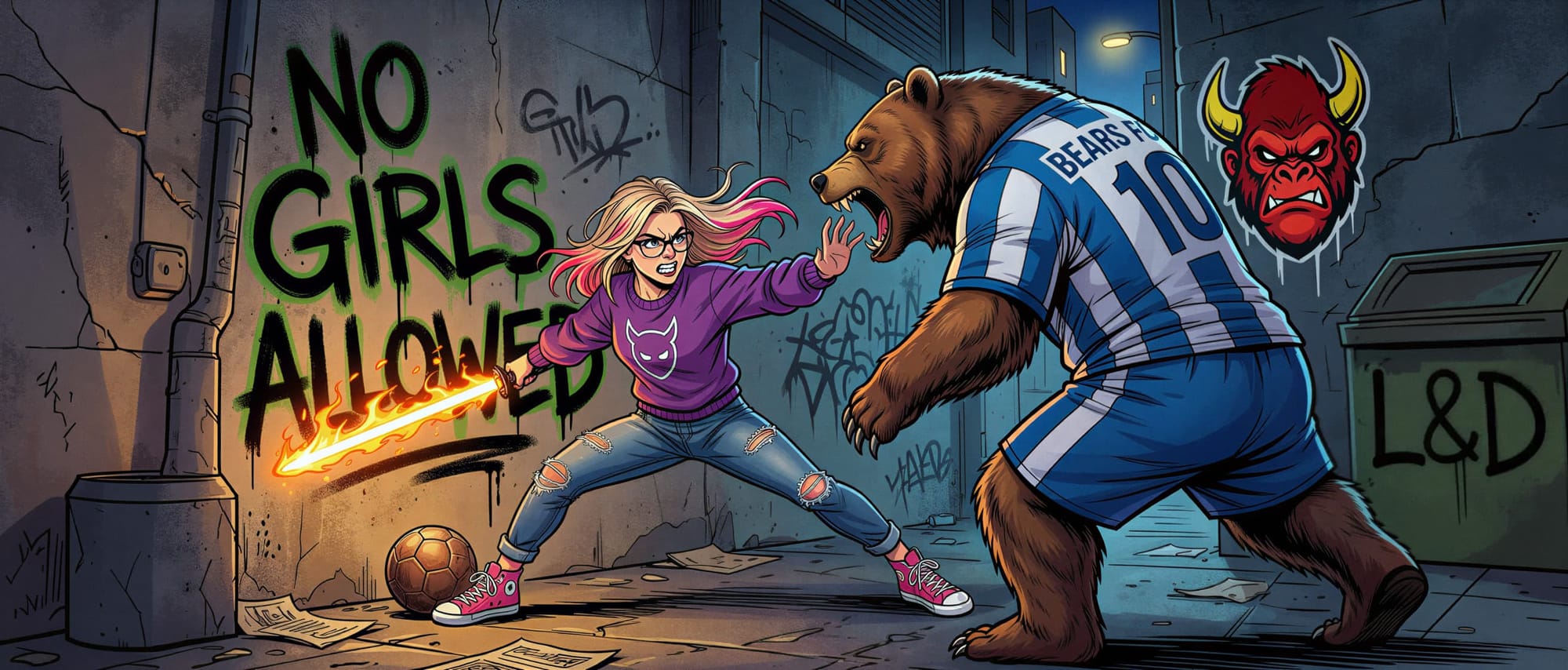
NO GIRLS ALLOWED The casual blindness of the well-intentioned male
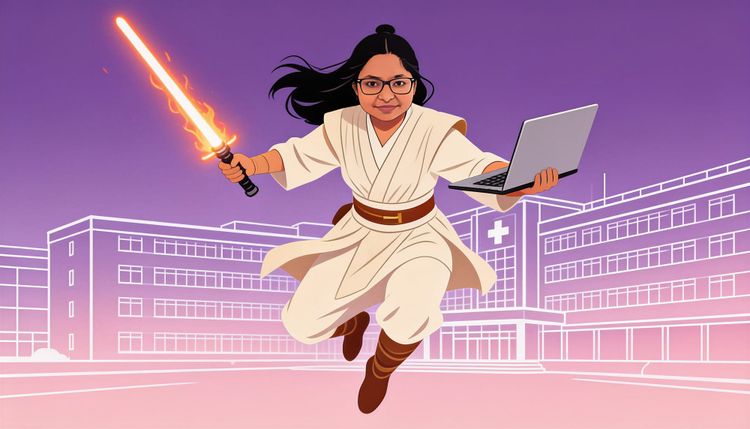
In the latest chapter of Hell and D, we’re helping Dee and her friends battle the demon of male dominance, AKA the Gencifier, as he tries to suppress female influence in L&D. Of course, monsters aren’t real but is the reality even scarier? Are there forces working to keep the learning and development industry a place where men thrive and women struggle to survive? If such a secret cadre of men exists, I definitely don’t count myself among them but is being a bloke with good intentions enough to change the status quo?
As a white, middle class, middle aged bloke living in the UK, I’m well aware that I have a degree of privilege that I’ve taken for granted pretty much my whole life. I’m not saying I’ve had it easy, and I’m not swimming in coin like Scrooge McDuck, but in recent years, a number of events have highlighted to me that my life has been made smoother, primarily because of what’s between my legs.
A few months ago, my 8 year old daughter came home from school and told me she hadn’t been invited to her friend Jamie’s birthday party this year because it was a football-themed party, and girls don’t play football. And it made me think about all the conversations I’ve had with learning professionals over the years regarding the empowerment of women, how getting more ladies into senior positions increases company profits, and how we can get the equality needle moving in the right direction.
They’re all valid, necessary conversations but there’s a huge gap between conversation and action. Through the magazine, I hope I’ve shown that I advocate for women in L&D spaces, but what is that actually doing? Because the reality is that my daughter was excluded from a birthday party just for being a girl. And the worst part? She wasn’t even upset - she just accepted that that’s how things are. And we wonder why there’s still a division of the sexes when it comes to careers.
Around the same time, I had an invite to be part of the Women in Learning panel at Learning Technologies in London this year. This was off the back of my involvement producing the Women in Learning: State of the Industry report with Sharon Claffey Kaliouby and Dr Asegul Hulus. (If you haven’t read it yet, honestly, why not?). The report was Sharon’s baby and I loved the idea of finally getting to meet her - we had only talked via the magic of video from our respective sides of the Atlantic, and it would be fantastic to support her on the panel. But then I discovered, they hadn’t actually reached out to Sharon at all.
Sharon has been involved in Women in Learning since 2013, and isn’t afraid to call out the injustices and inequalities of the L&D world. She rallies people to the cause and if that means getting a little rowdy, then so be it. But it seems the Learning Technologies organisers weren’t the rowdy-loving types. Instead, they invited the rookie male - me. Now, of course, word got around, people kicked up a stink and eventually, Sharon was booked at the 11th hour to attend. But the damage was already done and the message clear - even on a panel to discuss a report about Women in Learning, for the outspoken author of the report, it was “No girls allowed”.
And it didn’t stop there. Yes, Sharon finally got the invite but then the organisers performed a little bait-and-switch. The session itself wouldn’t be hosted in one of the premium auditoriums of the main conference, it was to be held on the exhibition floor, in the canteen, at lunchtime. It was a downgrade from previous years - we were to be the equivalent of having Sky News on in the background of a pub, as tables of people held their own conversations and chowed-down on a gristly lamb curry. Okay, that’s not entirely fair, as the majority of the people there did listen but that’s down to the politeness of the delegates, not the cynically engineered organisation of the event. And talking of the delegates, it was a good turnout but the audience was roughly 95% female, with a good majority already familiar with the content of the report, either because they had read it, or actually lived it. Preaching to the converted is a phrase that may well have been invented for the Women in Learning session. Why was this? Were male delegates unaware of the session or just uninterested? We’ll never really know but I didn’t see a lot of promotion for it and any promises of social media reshares prior to the conference from myself and the other panel members were, disappointingly, empty.
The session itself was well-structured, diving into the report's grim data and mapping out the industry changes needed to fix it. We talked about how women could support each other (though I’m fairly sure they already knew that) and how male advocates can take intentional action to level the playing field. Of course, that second part would have landed better if there were more than three men in the room - and I was one of them.
When it was my turn to speak, I shared a specific career blunder that still makes me wince. The more I work alongside women in L&D, the more I realise just how blind I used to be. This particular story is the perfect example of me naively making an absolute twat of myself. And because I’m still searching for absolution, I’ll share it with you here…
A few years ago, I worked with a similar group of white, middle class men, sitting round a table, creating online courses and building learning platforms. We listened to 90s grunge, talked about Star Wars and ate burgers. We had a Street Fighter arcade in the office and a shelf full of Ninja Turtles action figures. Need I say more? One day, someone suggested that we needed to hire a woman. It made sense - diversity, new ideas, fresh perspectives and approaches that men would never consider. It was a no-brainer - literally. Our new colleague - let’s call her Lily - started a few weeks later, fresh out of university, full of enthusiasm and wanting to learn. And looking back, that was the first mistake - we didn’t try to teach her anything. In our defence, we were very much a group of men who liked to pick up a piece of software and play with it until we broke it or decided it was worth keeping. We didn’t do formal internal training, onboarding or inductions. We just expected that this bright young woman would sit down, appreciate some Pearl Jam, eat some chips and start delivering some quality female-derived courses. We didn’t consider that she was new to e-learning (new to work even), that she was 20 years younger than us, or that even though we were a bunch of nice guys, she might feel a bit intimidated. We treated her exactly like we would if she had been another 40 year old male that we’d known all our lives. Surely that would make her feel welcome?
After a few weeks, Lily was picking bits up, playing with Moodle and had even implemented some production planning, which had been sorely lacking up until that point. But one afternoon, I found myself alone in the office with her, and as I fiddled with a new 360° camera, I sensed she was at a bit of a loss for something to do (it’s not that she might have felt weird about being in an office with some old man banging on about his love of the Bill and Ted movies at her). So, with the sunshine putting in a rare appearance, I suggested that we should go off into the woods with my new camera and I’d take some photos of her. I explained that I’d Photoshop a bear into the images too, so I wanted her to look absolutely terrified as I shot the pics. Please join me now as I reminisce on that moment and the cringe shoots down my spine. What the actual fuck was I thinking? And of course she agreed, and of course, she looked absolutely terrified on every single photo.
For me, that is my own personal definition of blindness when it comes to supporting women. My intentions were to include her in an activity, have a bit of fun and show her that e-learning wasn’t just about multiple choice quizzes and stock photos. But I absolutely missed the part where I should have taken the time to put myself in Lily’s shoes and assess the situation. I could have spent that afternoon asking her what she wanted from the role, if there was anything she was struggling with, if she needed training, but instead I came across as a creepy old guy with a camera. From my point of view, that one experience crystallises the whole of Lily’s short time with our company - naivety on our part, a failure to understand what she wanted/needed, and an expectation that she would just fit in with us, no questions asked or training given. And the fact that we thought we were doing everything right somehow makes it worse, but there was nobody to tell us otherwise.
And that’s why, swinging back to the session at the conference, it was so disappointing to see so few men there. Because there are countless pockets of well-intentioned guys who are completely clueless about how to work alongside women. But if nobody ever tells them otherwise, they’ll just keep making the same mistakes I did - not only creeping women out but never benefitting from having a female influence in their organisations. Yet if conferences are dismantling the presence of Women in Learning sessions (which they are), then there are even fewer opportunities for misguided men to become advocates and effect real change. It almost feels like a conspiracy theory - keep men treating women the same as they always have and women will always know their place. But that wouldn’t be the case would it? Women can do whatever men can, can’t they? We teach that as a basic fact in school now - don’t we?
“You can’t come to my football party. No girls allowed.”


Member discussion